
Slang in Jujutsu Kaisen: Modulo — Part 1: 「アリだ」
Usami's casual 'ari da' in Jujutsu Kaisen: Modulo — what this little phrase actually means, and why Japanese people lean on vague approval like this.
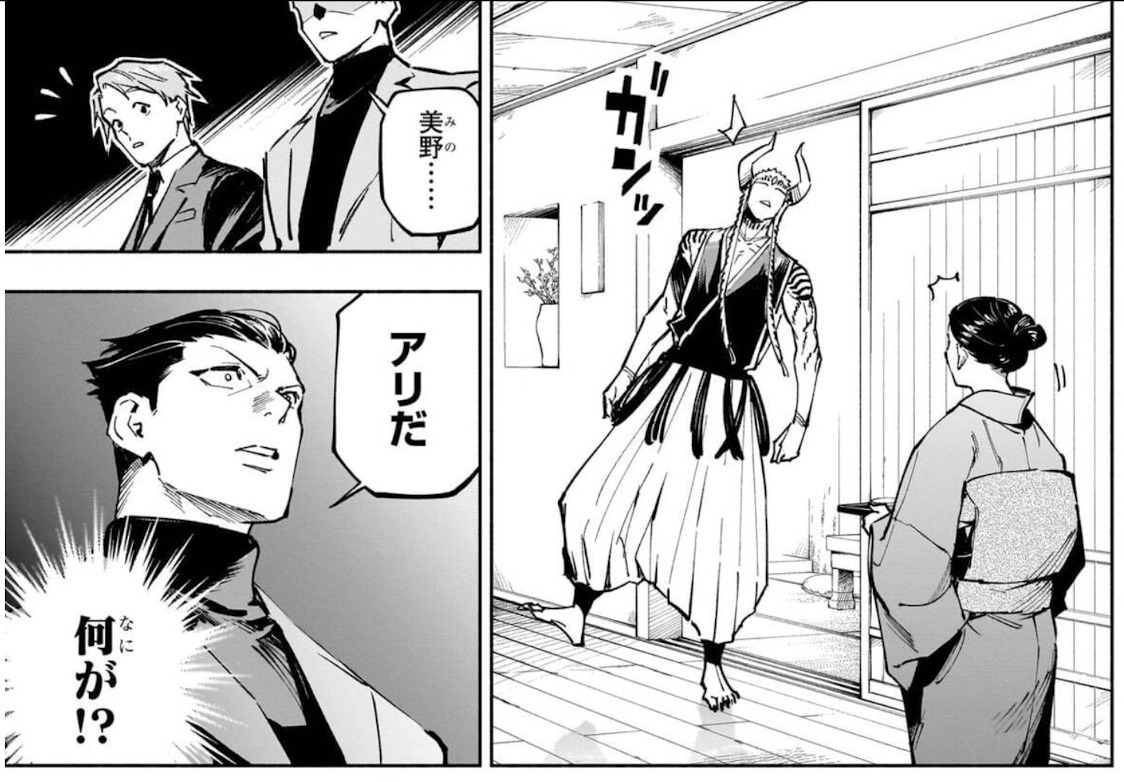
出典:『呪術廻戦モジュロ』第2巻より引用 芥見下々/集英社
Source: Jujutsu Kaisen: Modulo Vol. 2, by Gege Akutami / Shueisha
There’s a scene in Jujutsu Kaisen: Modulo where Usami simply says, 「アリだ」 (ari da).
No subject, no object, no qualifiers — just “ari da,” with the meaning left entirely up to context. This kind of expression, where the words themselves are stripped down and the listener fills in the rest from context, is something quite distinctly Japanese.
And 「アリだ」「アリだね」「それはアリですね」aren’t just manga lines — people genuinely use them in everyday conversation.
So what does “ari da” actually mean?
At its core, it’s a way of expressing approval — agreeing with what someone just said, or signing off on a suggestion. It can also be used about people or things.
For example, you might taste a dish and say 「アリだね」 — meaning something like “yeah, this works” or “this is good.”
Or, you might see a photo of someone and, if they’re your type, say 「アリだね」 — meaning “yeah, I could see myself dating them” or “they’re my type.”
To my ear as a native speaker, 「アリだ」feels like a shortened version of “there’s a possibility I’d choose this” or “that’s a possible option” — the word literally comes from 「ある」(“to exist / to be possible”). It can also carry the nuance of “your taste lines up with mine.”
So when you say 「アリ」 about a dish, you’re saying that out of all the options on a menu, this is one you’d order again — in other words, it’s something you’d happily choose.
The opposite: “nashi da”
There’s also the opposite — 「ナシだね」 (nashi da ne).
This one’s negative: it means “no, I wouldn’t go for that” or “that’s not gonna fly.”
「それはナシでしょ」 (sore wa nashi desho — “yeah, that’s a no”) is another phrase you’ll genuinely hear in daily conversation.
Back to the opening scene
When Usami says 「アリだ」 watching what looks like Dabura and Tomoe falling for each other at first sight, the phrase is doing even more contextual heavy lifting than the everyday uses above. It’s a fairly manga-flavored line.
The implied meaning is roughly: “an alien (and not just any alien — one of their strongest fighters) and a human getting together romantically would actually be a good path toward peaceful coexistence between the two species — that works.” All of that, packed into two syllables.
Why not just say it more directly?
You might notice this expression feels a little roundabout. Instead of 「それはアリだね」, why not just say 「それがいいね」 (“that’s good”) or 「私はそれが好き」 (“I like that”)?
Japanese conversation tends to avoid overly definitive statements. And 「それはアリだ」 isn’t actually saying “I’m choosing this” — it’s saying “this is a viable option, I’d be okay with it.” There’s no firm commitment.
It’s a small linguistic habit that reflects a cultural preference for harmony over assertion — keeping the door open rather than slamming it down on a single answer.